


The year was 1851. Industrialization and urbanization were on the rise in the United States, and the country was expanding westward, with the gold rush in full swing. That summer, a flood ravaged the Midwest, decimating the town of Des Moines, Iowa. Women had limited legal rights, and the nation was divided over the issue of slavery, which would not be abolished for another 15 years.
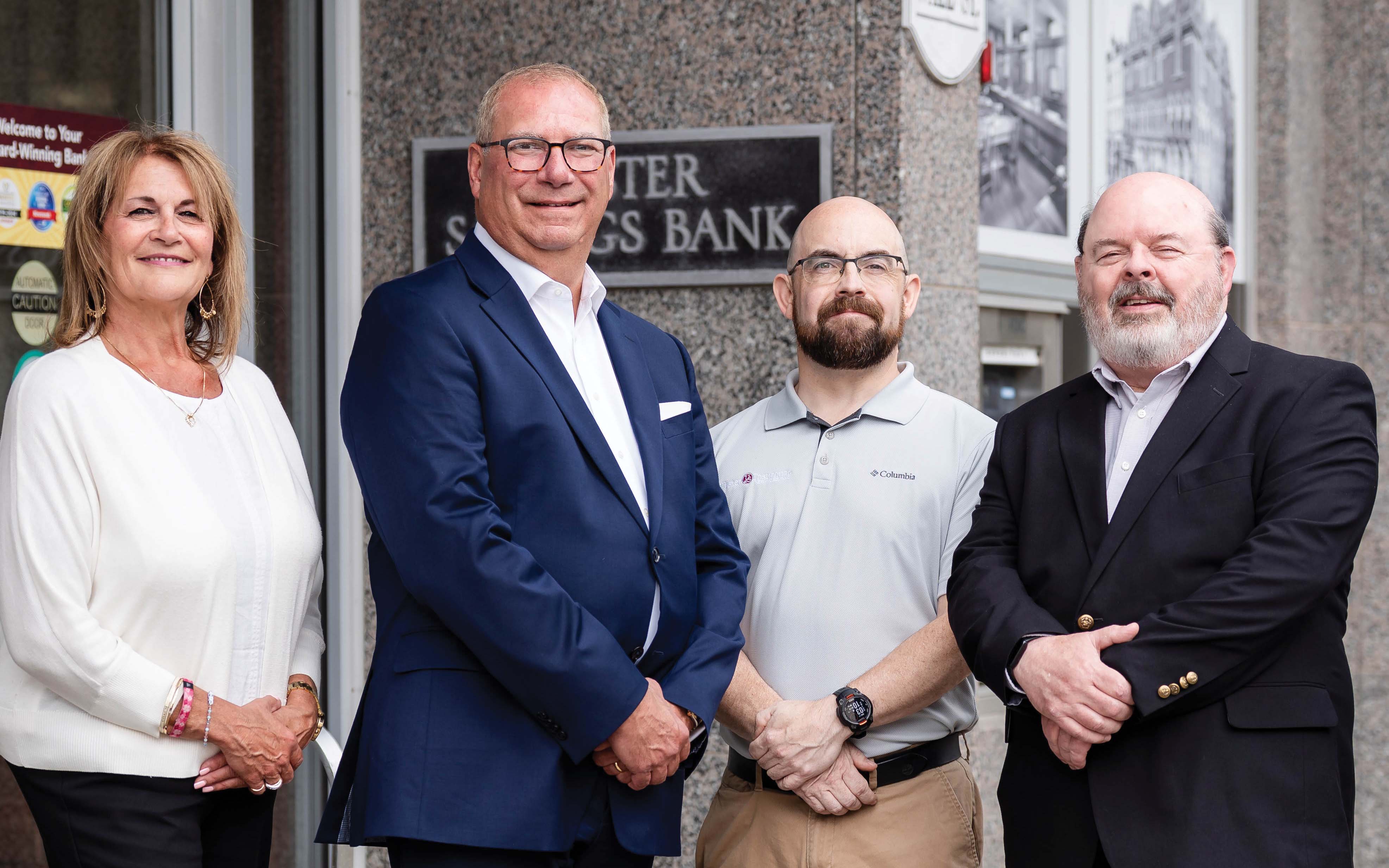
Meanwhile, banking was fragmented and often unreliable, and many Americans didn’t trust paper bills. Into this world emerged four new community banks. One of these was Ulster Savings Bank in Kingston, New York, a city halfway between the state capital of Albany and New York City.
175 years in service
In 1652, Europeans established a permanent settlement in Kingston, and two centuries later, the city was on the cusp of economic transformation. It was just missing one thing: a bank. A group of local businessmen wanted to give locals a reliable alternative to hiding money under their mattresses and petitioned the New York State Legislature. Ulster County Savings Institution was born on April 12, 1851, with its first deposit of $120 made two months later by customer Severyn Bruyn.
It was a declaration of trust, and this mutual savings bank has proven itself more than worthy of it. The Civil War that followed closely on the heels of its creation strained families and their finances, but as factories rose and quarries boomed, the bank flourished. Ulster Savings Bank (USB) is now the oldest bank in the Hudson Valley, the eighth oldest in New York and the 52nd oldest in the country. Today, it has 15 locations and $1.388 billion in assets.
According to president and CEO Bill Calderara, the community bank has thrived through boom and bust alike by maintaining a disciplined balance sheet and diversifying its business so it can succeed in any market environment.
But USB’s longevity is about more than just numbers. It’s also about customer loyalty. It’s common to see three or more generations of the same family banking with USB, proof of the trust its customers have in the bank.
“That loyalty exists because we stay true to our mission, vision and values,” says Calderara. “They’re not just statements in a strategic plan, but principles we live by every day.”
That sense of community is also true for the bank’s employees. Calderara says there are plenty of USB team members with 20, 30 or even 40 years of service under their belts. “Their deep institutional knowledge and commitment to our customers create continuity, trust and a culture that truly sets USB apart,” he says.
Of course, for such a long-lived institution, it hasn’t all been smooth sailing. USB has navigated plenty of turbulence over 175 years, including three depressions, 34 recessions, 10 pandemics, 44 presidential cycles and countless rate hikes and cuts.
“We learned how to survive moments when confidence disappears by managing risk, maintaining trust and adapting to change,” says Calderara. “Our greatest victories are finding solutions to help customers and community through their challenges.”
A notable anniversary like 175 years deserves to be celebrated, and USB is doing just that. In April, bank employees were treated to a “Through the Decades” gala, and in June, New York state senator Michelle Hinchey added USB to the New York Historic Business Registry. And all year long, the bank has been giving away special gifts at community events.
“We preloaded our branded gift cards in amounts that reflect our history,” explains Calderara. “$120 for our first customer deposit amount; $175 for 175 years in service; $1,851 for the year we were founded. The dollar values are a bit odd and encourage conversation around the actual meaning of the amounts chosen!”
A bank for the Absentee Shawnee Tribe
There are three federally recognized tribes of the Shawnee People: the Eastern Shawnee, the (Loyal) Shawnee and the Absentee Shawnee Tribe (AST). The latter got its name for being absent at the signing of an 1854 treaty that would have relocated the tribe to a reservation in Kansas. Instead, the tribe opted to migrate to Oklahoma or Texas. Today, the AST is located primarily in central Oklahoma, with its tribal government based in Shawnee.
AllNations Bank, which is 125 years old but has been under AST ownership since 2004, is one of 20 Native-owned full-service banks in the U.S., says CEO and CFO Jill Maple. Its existence means profits and decisions stay connected to the tribe’s interests while filling a major gap in tribal finance.
The community bank’s leadership meets regularly with tribal leaders to understand and design solutions specifically for tribal financial needs, providing financial literacy training and working one-on-one with tribal members to create customized financial solutions, rather than using a one-size-fits-all approach.
AllNations Bank also offers small-dollar loans and accessible financing options that can help people who might not qualify at larger banks.
“Because we are locally owned, loan and banking decisions are made in the community, not by distant corporate offices,” says Maple. “This helps ensure people and businesses get more flexible, personalized support.”
150 years in service
In 1876, George Custer was defeated at the Battle of Little Bighorn in Montana. On the other side of the country, a new bank was born: the Centreville National Bank of Maryland. Nineteen years later, Talbot Bank of Easton was founded. And in 2017, the two venerable institutions came together formally as Shore United Bank. Headquartered in Easton, Maryland, today, it has 40 locations across Maryland, Delaware and Virginia and $6.3 billion in assets.
Over the years, says chief operating officer Donna Stevens, the community bank has weathered economic downturns and recessions, rapid regulatory changes, industry consolidation and competitive pressures, mergers and acquisitions, as well as the COVID-19 pandemic, where it played a critical role supporting customers during the Paycheck Protection Program.
Shore United Bank’s longevity, Stevens believes, is rooted in three core strengths: deep community commitment, adaptability and a foundation of trust built over generations. Since its founding, the bank has remained focused on serving the financial needs of local families and businesses. It maintains strong relationships while evolving its products and services to meet changing market conditions. This balance—staying local while thinking ahead—has enabled the bank to navigate economic cycles and continue growing with its communities.
“The bank’s greatest successes center on impact, not just growth,” Stevens adds.
Shore United Bank is marking its 150th anniversary by recognizing the employees, customers and communities who have shaped its legacy. For its anniversary week in mid-June, Shore United celebrated with in-branch treats and giveaways. Customers were invited to submit questionnaires with predictions about what the bank and its communities will be like when it celebrates its 200th anniversary in 2076. Some of these predictions will be included in the time capsules each location is creating that will be opened 50 years from now.
125 years in service
The year was 1901. President William McKinley was assassinated and succeeded by Theodore Roosevelt. On the other side of the Atlantic, Queen Victoria died, ending her reign as the longest-serving British monarch and passing the crown to her son, Edward VII.
That year, the State Bank of Calumet was founded in Oklahoma to encourage home ownership and support farming and ranching within the local community. And in 2004, it was sold to the Absentee Shawnee Tribe (AST) and renamed AllNations Bank.
Today, $86 million-asset AllNations Bank has two locations: its headquarters in Calumet, and another in Shawnee. As one of few Native-owned banks in the United States, it plays a unique and important role within its community.
“There were several reasons that made sense for the Absentee Shawnee Tribe to purchase a bank,” explains Jill Maple, the community bank’s CEO and CFO. “They wanted to expand beyond their traditional revenue sources, such as gaming, [and] into other businesses to help reduce reliance on a single industry. Tribes have also historically faced barriers accessing loans and capital from mainstream banks, so owning their own bank allows them to support projects aligned with tribal priorities.
“And lastly,” Maple continues, “it was to expand services to tribal members and other Native American tribes while continuing to serve the local farms and residents in Calumet and Canadian County.”
Maple cites AllNations Bank’s community-focused values, local ownership and ability to adapt over time as the reasons for its enduring success. But that persistence has not been without significant bumps in the road.
She says one of the biggest challenges the bank has faced during her tenure was in 2019, also the year she came on board. At that time, AllNations Bank was classed as a troubled bank, and it needed to address and improve roughly 20 regulatory provisions to satisfy compliance requirements.
“The previous CEO and I worked together to strengthen controls, improve processes and ensure we met each of those provisions,” says Maple.
Through a focused and disciplined effort, the community bank was able to satisfy all requirements, and the sanctions were lifted within 23 months. AllNations Bank then built on that progress, shifting its focus toward performance and growth. By the following year, it was profitable.
“That experience really highlights our organization’s resilience, our ability to execute under pressure and our commitment to doing things the right way,” says Maple.
In celebration of its 150th anniversary, AllNations Bank unveiled a mural on the outside of the Calumet branch that honors the town and residents of Calumet, Canadian County and Route 66. The community bank will also host celebrations for its two communities, featuring barbecue, snow cones, outdoor inflatables and lawn games, door prizes and giveaways.
A symbol of endurance and growth
Southampton, Pennsylvania-based Quaint Oak Bank’s is marking its centennial year with a commitment to the future and a series of community-focused initiatives, including a “100 Years Growing with You” campaign.
“We launched the effort by committing to plant 100 trees,” says CEO Robert T. Strong, “with an additional tree planted for every new account opened in 2026.”
The community bank’s priorities for the year include supporting other environmental initiatives, enhancing public green spaces and improving accessibility.
“We’ve also partnered with several local libraries to sponsor educational programming and establish community seed libraries,” says Strong. “Our goal is to work alongside trusted local organizations that are already strengthening our communities, helping to extend and amplify their impact.”
Strong hopes that through these collaborations, Quaint Oak Bank can honor its history while making thoughtful, lasting investments in the communities that have supported it for the past century.
100 years in service
In 1926, three years before the United States plunged into the Great Depression, Quaint Oak Building and Loan was founded in Southampton, Pennsylvania. Against the odds, the community bank, now called Quaint Oak Bank, is in its centennial year.
CEO Robert T. Strong says that from the outset, the $643.2 million-asset community bank’s story has been shaped by how it responds to challenging environments.
“In 2000, we transitioned from a part-time to a full-time operating model,” says Strong. “In 2007, we completed our mutual-to-stock conversion and became a publicly traded company—just ahead of another significant recession. More recently, during the pandemic, we transitioned our entire organization to a remote environment in a matter of days, ensuring uninterrupted service to our customers.
“Today,” he adds, “our team spans 22 states and includes four subsidiaries, reflecting how we’ve embraced change while positioning the bank for the future.”
Quaint Oak Bank’s growth, Strong says, has never been for growth’s sake.
“Our longevity comes from disciplined execution, long-term thinking and an unwavering focus on relationships,” he says. “Across generations, the bank has prioritized stability, trust and serving our communities the right way. That foundation has allowed us to adapt to a century’s worth of change while remaining true to who we are.”
Back in time
100 years: 1926
| Bank Name | City | State |
| The Yellowstone Bank | Laurel | MT |
| Surety Bank | Deland | FL |
| Bank of Commerce & Trust Company | Crowley | LA |
| Corydon State Bank | Corydon | IA |
| Community Bank | Dunlap | IA |
| Citizens Bank | Butler | MO |
| St. Johns Bank & Trust | Saint Louis | MO |
| Logan County Bank | Scranton | AR |
| Produce State Bank | Hollandale | MN |
| State Bank of Lake Park | Lake Park | MN |
| The First National Bank of Moose Lake | Moose Lake | MN |
| First State Bank & Trust | Williston | ND |
| BankStar Financial | Elkton | SD |
| DNB National Bank | Clear Lake | SD |
| Quaint Oak Bank | Southampton | PA |
125 years: 1901
| Bank Name | City | State |
| First National Bank Colorado | Las Animas | CO |
| Pioneer Bank | Roswell | NM |
| Mount Vernon Bank | Mount Vernon | GA |
| Colfax Banking Company | Colfax | LA |
| Sabine State Bank and Trust Company | Many | LA |
| Bank of Winnfield & Trust Company | Winnfield | LA |
| Community Bank of Louisiana | Mansfield | LA |
| Bank of Forest | Forest | MS |
| One Bank of Tennessee | Cookeville | TN |
| Bank of Gleason | Gleason | TN |
| Libertyville Savings Bank | Fairfield | IA |
| Heartland Bank | Gowrie | IA |
| Union State Bank | Clay Center | KS |
| ESB Financial | Emporia | KS |
| Union State Bank | Everest | KS |
| The Lyndon State Bank | Lyndon | KS |
| First National Bank | Scott City | KS |
| Union State Bank | Uniontown | KS |
| State Savings Bank | Frankfort | MI |
| Northern Interstate Bank, N.A. | Norway | MI |
| Chambers State Bank | Chambers | NE |
| Bristol Morgan Bank | Oakfield | WI |
| Peshtigo National Bank | Peshtigo | WI |
| Great Rivers Bank | Barry | IL |
| First National Bank in Pinckneyville | Pinckneyville | IL |
| Resource Bank, N.A. | Dekalb | IL |
| FCN Bank | Brookville | IN |
| Home National Bank | Thorntown | IN |
| UNICO Bank | Mineral Point | MO |
| First National Bank | Waverly | OH |
| Davis Trust Company | Elkins | WV |
| Calhoun County Bank | Grantsville | WV |
| Putnam County Bank | Hurricane | WV |
| Hometown Community Bank | Cyrus | MN |
| The First State Bank of Fountain | Fountain | MN |
| Freeport State Bank | Freeport | MN |
| Harvest Bank | Kimball | MN |
| The First National Bank of Le Center | Le Center | MN |
| Triumph State Bank | Trimont | MN |
| State Bank of Bottineau | Bottineau | ND |
| Wisdom Heritage Bank | Alva | OK |
| FirstBank | Antlers | OK |
| AllNations Bank | Calumet | OK |
| The Citizens Bank of Edmond | Edmond | OK |
| The State Exchange Bank | Lamont | OK |
| City National Bank & Trust | Lawton | OK |
| Seiling State Bank | Seiling | OK |
| Citizens State Bank | Arlington | SD |
| Farmers State Bank | Canton | SD |
| The First National Bank of Aspermont | Aspermont | TX |
| The Karnes County National Bank | Karnes City | TX |
| The Commercial Bank | Mason | TX |
| Wrentham Cooperative Bank | Wrentham | MA |
| The Adirondack Trust Company | Saratoga Springs | NY |
| Community Bank | Washington | PA |
150 Years: 1876
| Bank Name | City | State |
| Bank of Yazoo City | Yazoo City | MS |
| Audubon State Bank | Audubon | IA |
| Bank of the Flint Hills | Wamego | KS |
| Fortifi Bank | Berlin | WI |
| Anderson State Bank | Oneida | IL |
| Citizens Bank Minnesota | New Ulm | MN |
| Shore United Bank, N.A. | Easton | MD |
175 years: 1851
| Bank Name | City | State |
| Seamens Bank | Provincetown | MA |
| BayCoast Bank | Fall River | MA |
| Ulster Savings Bank | Kingston | NY |
| Community National Bank | Derby | VT |