


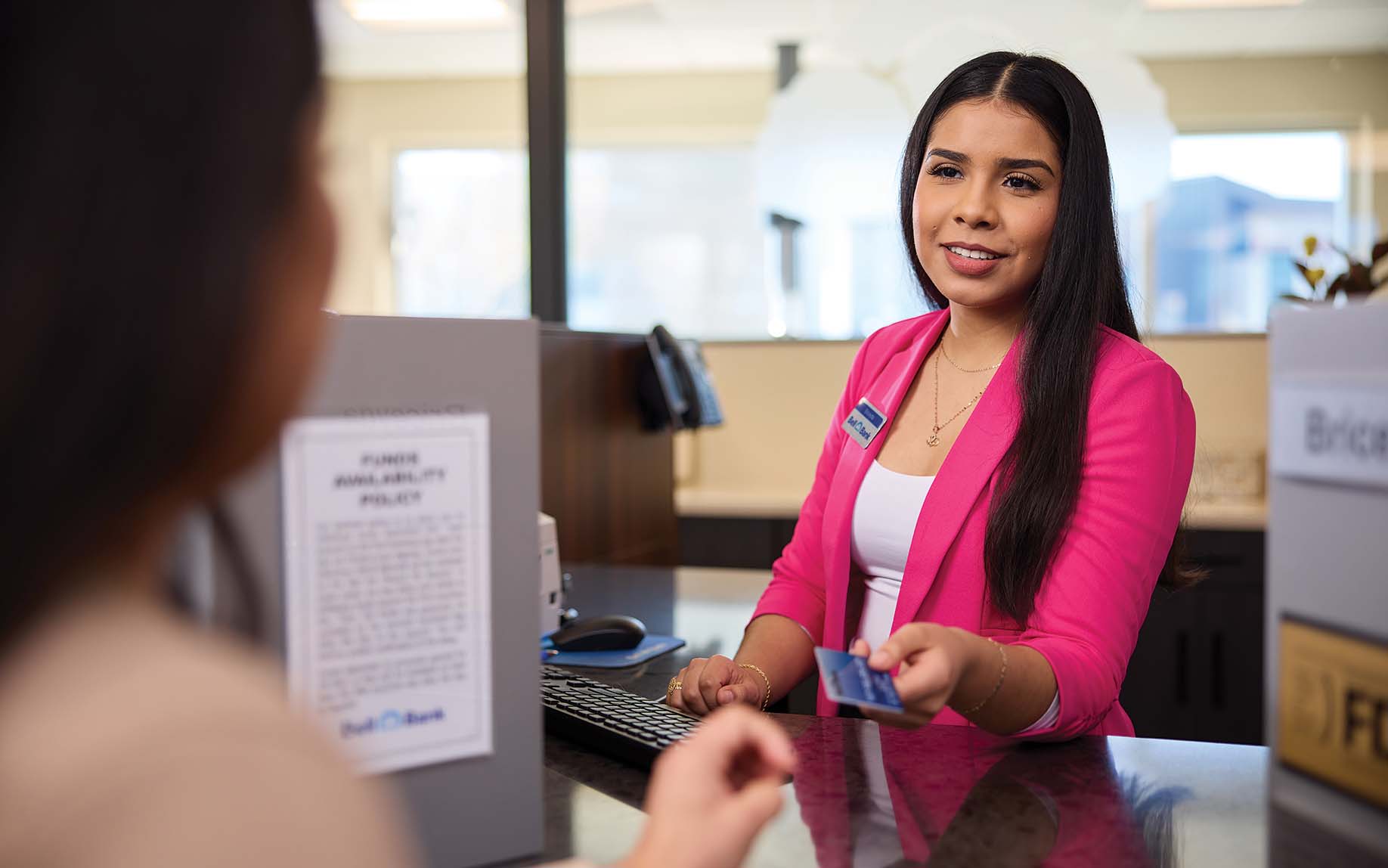
Ascending from teller to head teller took fewer than two years for Erin Anderson of $1.6 billion-asset BOM Bank in Natchitoches, Louisiana. The community bank referenced Anderson’s dedication, attention to detail and outstanding service in a social media post celebrating her promotion in 2025.
For her part, Anderson says, “Just really working hard at it every day and showing [the bank] that you want to learn—that you want to be there—I think that makes a big difference.”
What does it take to get the most out of tellers and universal bankers, who are expected to have people skills, product knowledge and customer insight? There’s no single formula, but hiring candidates who can excel at customer service, offering high-quality training and building a good culture are ingredients for success.
Hiring the right bank tellers starts with the right match
Todd Sheppard didn’t have a banking background when he started working as a float teller across branches of $424 million-asset Sugar River Bank in Newport, New Hampshire, in 2025.
What Sheppard did have was experience helping customers at a fitness center, where he opened accounts and greeted people.
Ginger Marsh, the community bank’s AVP and regional branch administrator, hired Sheppard. She says, “When I’m hiring, I look for someone with a positive attitude, strong communication skills and a personality that will contribute to a great team environment.”
Marsh explains that while policies, procedures and technical skills can be taught, qualities like attitude, professionalism and personality are harder to train.
“I would rather hire someone with the right mindset and invest in teaching them the job than hire someone with experience who isn’t a good fit for the team,” she says.
Communication is a top skill for bank tellers
For Amber Huschka, SVP and retail banking manager at $15 billion-asset Bell Bank in Fargo, North Dakota, viable teller candidates are clear, strong communicators. Huschka also wants people on her team who can be empathetic with customers and who naturally want to help people.
In addition, there’s a people skill she appreciates that she calls a “dying art form.”
“When you find someone who gets energy out of connecting with others and being around other people, grab onto them,” she says.
How to train bank tellers effectively
BOM Bank has trained its tellers in different ways over the years. Trainers used to work with new hires in the branches, but taking in so much knowledge while standing in front of customers can be overwhelming, says Claire Mayeaux, human resources director and benefits administrator. At another point, bank managers handled training, but it was inconsistent. Mayeaux says some went in-depth in their explanations while others took a more sink-or-swim approach.
Now, new tellers work with trainers for about seven days on a mock teller line to learn how to handle transactions and work through different scenarios.
“We have seen such an immense difference in the success of our tellers,” Mayeaux says. “When they get to the teller line, they are confident in their skills.” Those who are promoted to a higher teller position return for one‑on‑one training sessions to learn additional skills.
BOM Bank also offers ongoing training, as do Bell Bank and Sugar River Bank. Sheppard, who was promoted to universal banker in May 2026, finds his bank’s training helpful.
“I continue to learn more things as I [am] trained on newer topics,” he says.
Build a positive culture for bank employees
A good culture can bring out the best in bank employees. One that encourages open communication can make frontline workers feel comfortable asking questions and offering ideas, for instance.
Throughout the year, Sugar River Bank gives small gifts to staffers and provides appreciation activities. Marsh believes the gestures help boost morale and let employees know they are valued.
“Feeling appreciated can have a positive impact on both teamwork and customer service,” she says.
Meanwhile, she leads by example, working alongside tellers and universal bankers.
“When employees feel supported by their manager,” she says, “they’re more engaged and willing to give their best.”
Try these teller training resources from ICBA
ICBA offers resources that can enhance the skills of employees new to banking, as well as those who want to level up.
These offerings include online, self-paced programs that provide a certificate of completion and don’t require continuing education.
- The Teller Specialist Certificate Program includes basics on topics like deposits, currency, handling money and check, as well as training on customer service and compliance.
- The Universal Banker Certificate Program helps learners develop skills to meet the needs of all bank customers in ways that align with regulatory standards.
ICBA Education also offers numerous online courses covering teller training and soft skills like active listening, communication and problem‑solving.
Also available are webinars like “Multi-Task Role of the Banker,” which can help tellers and universal bankers learn key strategies for working in today’s banking environment. Learn more and register.