


Name:
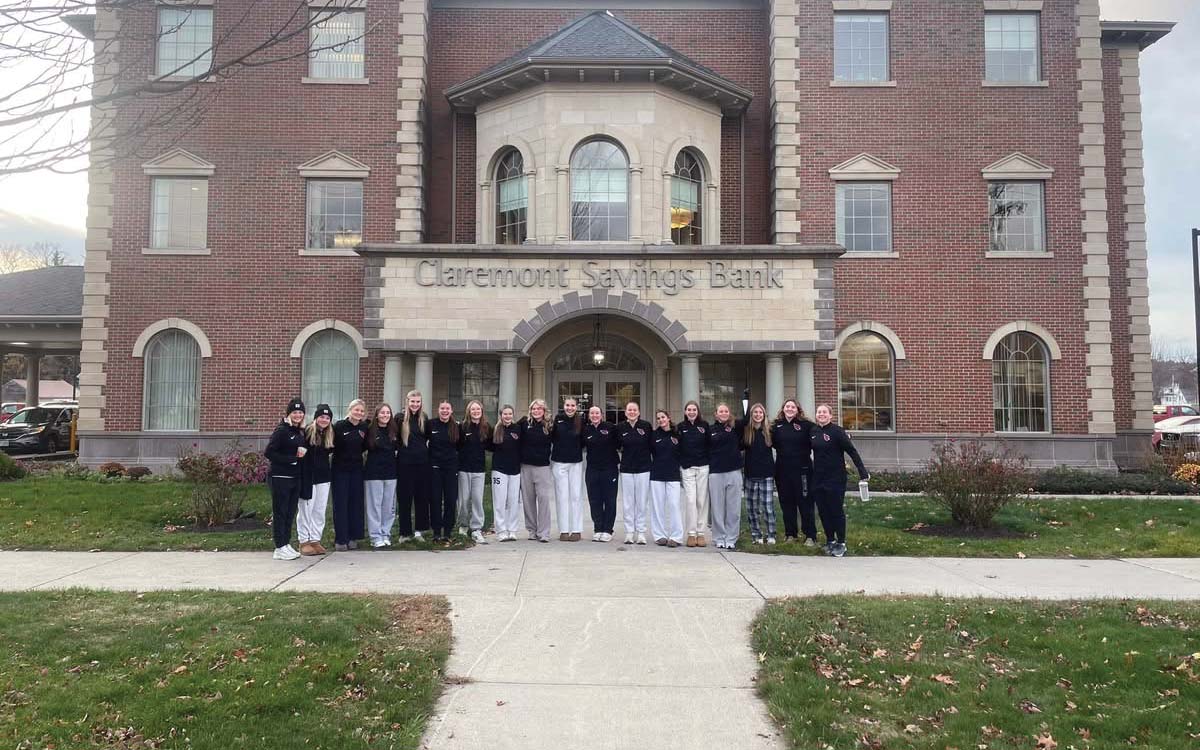
Claremont Savings Bank
Assets:
$600 million
Location:
Claremont, New Hampshire
On Monday, August 25, 2025, $600 million-asset Claremont Savings Bank (CSB) in Claremont, New Hampshire, learned that School and Administrative Unit 6 (SAU 6) had a budget shortfall so sizable that it might not be able to open schools.
With less than a week left on the calendar, the community bank launched an all-hands-on-deck effort that ended with CSB delivering a $4 million line of credit to SAU 6 just 48 hours later.
Terri Decker, CSB’s VP and private banking officer, who works with principalities and school systems, was the first to learn of the brewing financial storm.
“She keeps her ear to the ground with all the community organizations, and got wind of this,” says David Finnerty, president and CEO of CSB.
The school district is a CSB customer and Decker brought SAU 6 representatives to the bank that Monday morning. At the outset, a big problem was that SAU 6 didn’t know the exact amount of the budget shortfall. “It was anywhere from $1 million to $5 million,” Finnerty says.
Nevertheless, CSB took on the challenge. “We dropped everything,” he says. “It was just a question of how we were going to help.”
SAU 6 had an Education Adequacy grant from the state of New Hampshire, but the funds are distributed quarterly. “This wasn’t going to help them upfront,” Finnerty explains. “They needed a cash flow buffer.”
Over the next day, Decker worked with a financial consultant SAU 6 had brought in to get a clearer picture of the budget. They determined it would take an additional $4 million to open SAU 6 schools.
Securing the $4 Million Line of Credit Backed by State Bonds
Meanwhile, Jim Lynch, CSB’s chief commercial lending officer, educated himself on loans backed by state bonds. SAU 6’s law firm was putting together the Education Adequacy grant application, and Lynch collaborated with the firm to figure out how to structure the line of credit and get the funds to SAU 6 in a manner that protected the bank.
“Jim went through law school in 24 hours,” Finnerty says with a laugh. “He had to figure out the bonding and write the note to get in front of our board by Wednesday.”
While Lynch and Decker worked together to determine how CSB might meet SAU 6’s needs, Finnerty communicated with CSB’s board of directors. A regular board meeting was already scheduled, but Finnerty put the school district’s request at the top of the agenda.
“We explained that we have students, parents and teachers who are in trouble, and we needed to get them past that,” Finnerty explains. “How could you have a school system fail? It was the right thing to do.”
CSB’s board not only backed the executive team’s actions; they congratulated them on the speedy, effective response.
“It was the flexibility and creativity of a community bank in action,” Finnerty says. “We stopped everything, focused on the problem, got ourselves educated and met with critical stakeholders.”
Funding the SAU 6 Extracurricular Budget Shortfall with a $100,000 Donation
CSB wasn’t done helping the district. It turned out that SAU 6 still had budget shortfalls for many extracurricular activities, such as sports and the arts. CSB reviewed its own budget to identify additional funds it could donate to the school district.
“We went through the budget looking for where we have the funds to rob Peter to pay Paul,” Finnerty says. CSB cut back primarily on its marketing budget and was able to make a $100,000 donation to the school district. The community bank also made space in a parking lot for the high school soccer team to hold a car wash fundraiser.
CSB has earmarked another $25,000 in funds for a donation this spring. Finnerty notes that the donations to the school district have been made without affecting the bank’s donations to other community causes.
Carol Vivian, CSB’s former chief customer experience officer, who is now retired, worked with the Stevens High School alumni association to coordinate donations from multiple sources and ensure donations got to the schools and programs most in need.
CSB’s all-out effort for the school district reflects its strong community ties, with many bank employees having grown up in Claremont. “The majority of our employees attended Stevens High School or have kids there,” Finnerty says.
Why Community Banks Succeed Where Regional and National Banks Fail
In addition to those personal ties, CSB employees have a strong commitment to community service. In 2025, CSB employees performed 3,855 hours of volunteer service on more than 50 nonprofit boards.
“It encompasses who we are,” Finnerty says. “We’re a mutual bank owned by our depositors. We’re not driving to quarterly returns. We have a much longer-term vision of value.”
He adds that none of the larger regional or national banks located in the area came to the aid of SAU 6.
“That creates a great case of why you want a community bank in your community,” he concludes. “This proved the point that community banks are there in good times, and we step up in bad times. I’ve never been prouder to be part of a community bank.”