



As the community banking industry looks toward the end of a historic year, it is worth pausing to consider what 2025 has meant to us.
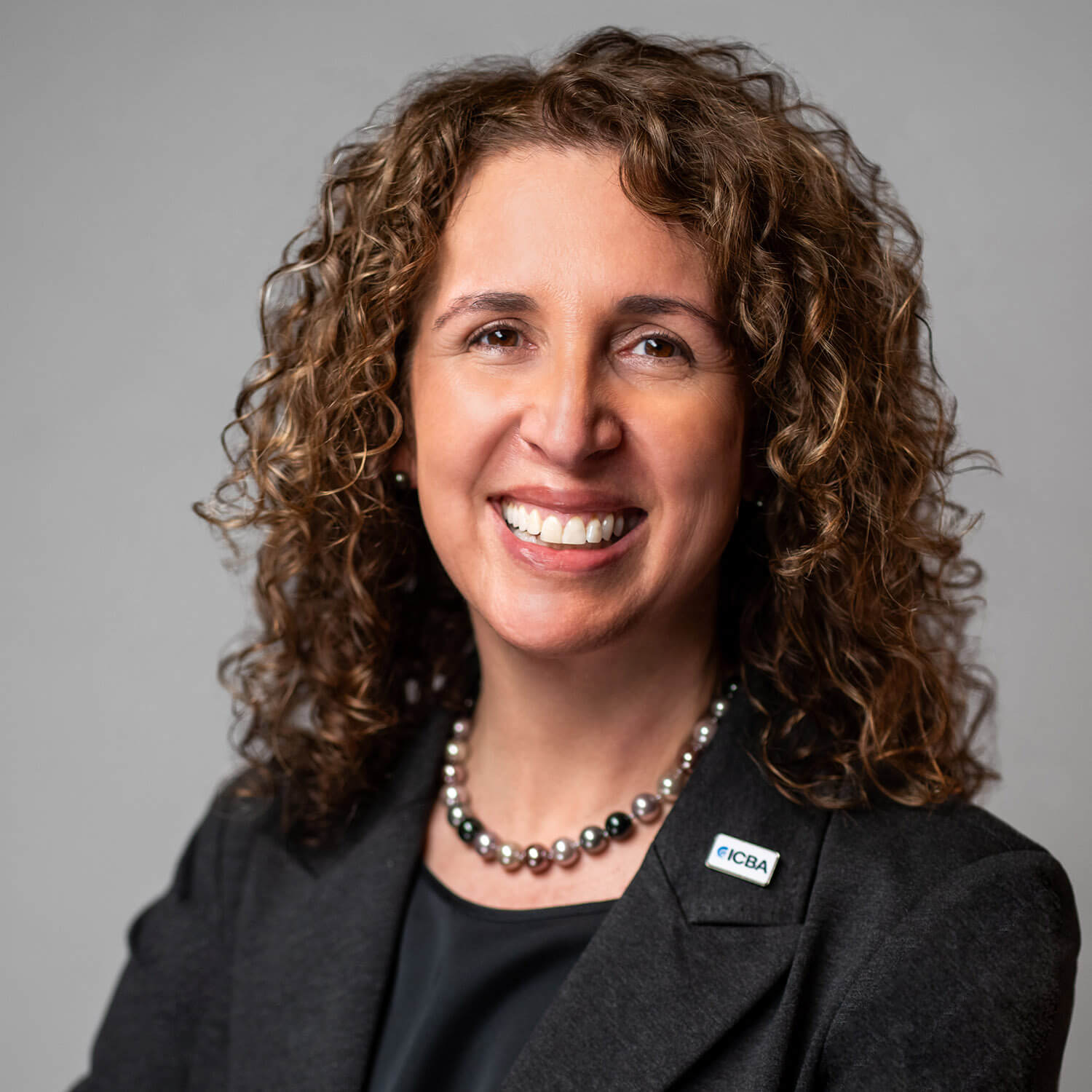
I had a chance to sit down with ICBA Chairman Jack Hopkins—the president and CEO of CorTrust Bank in Sioux Falls, S.D.—to revisit what has been an extraordinarily eventful year in community banking and how it will shape the road ahead.

Jack: The pace of change over the past year has been unbelievable.
Consider tax relief. We helped to ensure the Subchapter S tax relief is permanent, secure lower individual rates, and raise the estate tax exemption. On top of that, we were able to include a 25% ACRE Act exclusion on ag and rural lending.
We have to and will keep working to expand that exclusion, but getting it through Congress after advocating on that issue for years—that’s a significant achievement.
Jack: There’s an optimism I haven’t seen in roughly 15 years or so. With so many new rules in recent years directly affecting community banks, rolling back a lot of these regulations has been very encouraging.
Just think about the scale of change. The CFPB’s 1071 proposed rule has significant improvements that will exempt the vast majority of community banks, and its overdraft rule was totally overturned. The prudential regulators have raised FDICIA audit and reporting thresholds, reduced BSA/AML burdens, withdrawn climate risk and corporate governance rules, and changed course on disparate impact.
Michelle Bowman—a former community banker—is serving as the vice chair for supervision at the Fed. And we have proposals to lower the Community Bank Leverage Ratio, revise the supervisory appeals process, and rescind the 2023 Community Reinvestment Act rule.
These are tremendous achievements from start to finish that will have a significant impact on our banks and our communities.
Shared an Image
Jack: One thing you appreciate more and more is the importance of playing defense. As usual this year, merchants continue working nonstop to attach new credit card routing requirements to legislation moving in Congress, and once again ICBA has been instrumental in stopping that from happening.
Same goes for an amendment to cap the credit card APR at 10%—community bank opposition was essential to stopping that.
Another big win that springs to mind is the ICBA legislation on mortgage “trigger leads” signed into law by President Trump. When that takes effect next year, I’m very interested in the impact on our borrowers, because restricting the credit reporting agencies from selling their contact information is going to be such a game-changer to the mortgage lending process.
I’ll tell you one more that I think about is ICBA’s work on combating fraud. Obviously, fraud and scams are so intractable these days that it’s become all-hands-on-deck for our front line.
But ICBA and community bankers deserve credit for all the check fraud resources we’ve been able to get out to our industry, and for elevating check fraud to the point where the administration is fully transitioning from paper benefits checks.
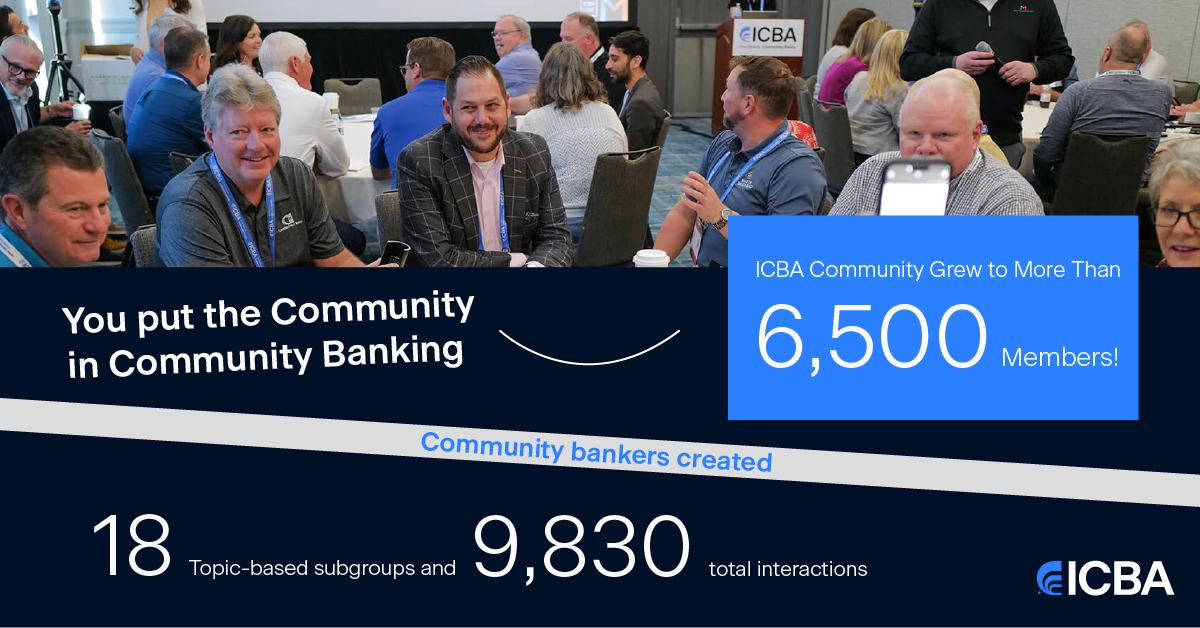
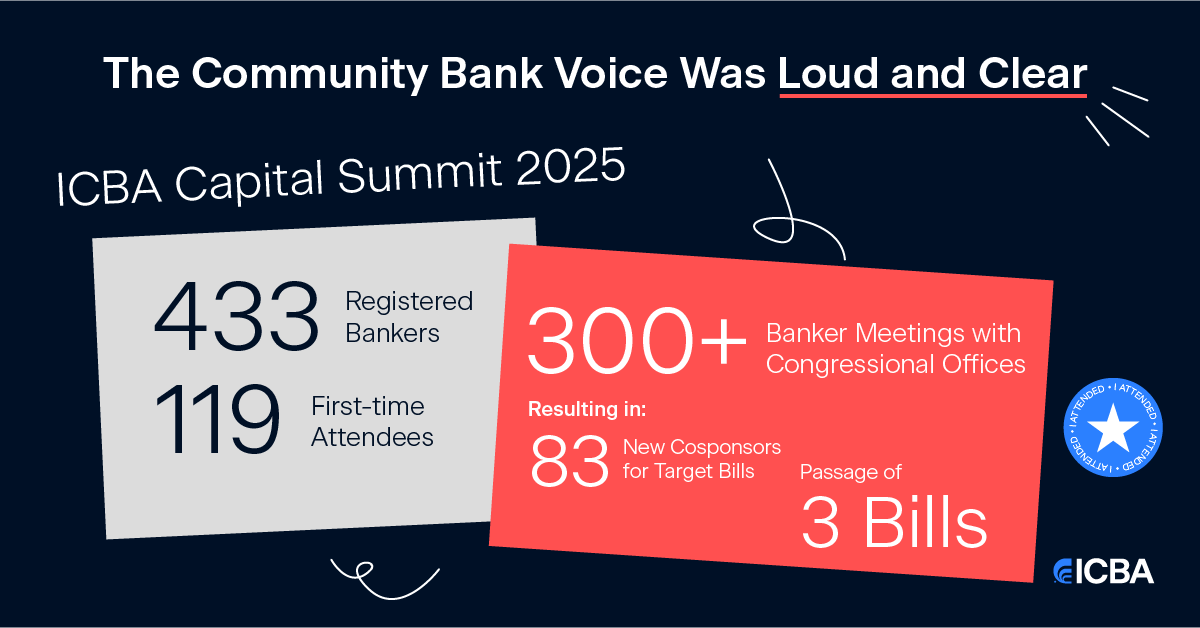
Jack: What I’m most proud of is the level of engagement I’ve seen from community bankers—they have responded to these opportunities and been really engaged in advocacy. It’s a higher level of engagement than I’ve seen in the past decade.
We could sit here and take victory laps over these achievements all day long, but we all know what really matters is community bankers connecting with their policymakers as constituents. That’s what’s allowed us to move the needle so much this year.
Shared an Image
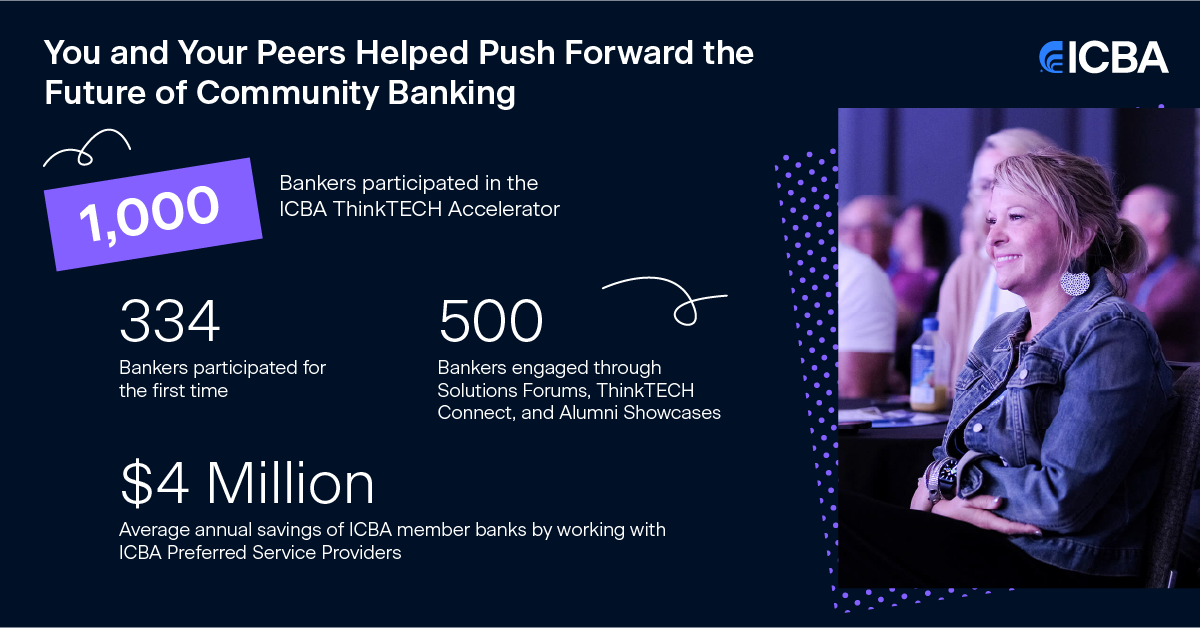
Jack: You know, the other area where I see this level of engagement is innovation. I’m seeing more and more community bankers really enthusiastic about the ThinkTECH Accelerator and ICBA’s other solutions programming.
My bank has certainly benefited from it, and it’s so important to help level the competitive playing field with the megabanks and nonbank entities that have the deck stacked in their favor.
Shared an Image
Jack: That idea of a level playing field is so important and really covers a lot of ground.
Of course, we’ve always fought for greater tax and regulatory parity with credit unions and the Farm Credit System. ACRE is really based on that idea of parity with FCS, and there’s no doubt we’ve been making a lot of headway on the credit union front. I think the credit unions are in a bit of a crisis given how much negative attention the biggest CUs are generating for that industry’s tax exemption.
But another big part of this is the nonbanks applying for the OCC’s national trust bank charter. All these different nonbank fintechs want the benefits of a U.S. bank charter without meeting the same level of regulations. It’s something we’re going to have to continue fighting back on.
And another thing I think about in terms of leveling the playing field is deposit insurance reform. I know 100 community bankers are going to have 100 different opinions on how to go about it, but reform is absolutely essential to supporting consumer and investor confidence while offsetting the impact of the too-big-to-fail guarantee.
I think the debate on deposit insurance so far this year has been an important starting point, and we’ll need it to continue in 2026. We need to reform the system now at a time of market stability so we’re not dealing with it during the next big bank crisis.
Shared an Image
Jack: Yeah, digital assets. This is so important at every level: advocacy, innovation, and education.
Obviously we are in the thick of it in Congress. The GENIUS Act took a critical first step in barring stablecoin issuers from offering yield and interest. Well, now Congress needs to extend that policy to crypto exchanges under the market structure legislation. As you know, we’re talking about literally hundreds of billions or even a trillion dollars in deposits potentially leaving community banks—devastating small-business lending and local economies.
But as I say, this isn’t just a matter of advocacy. We also need to lean into innovation to help community banks stay at the forefront as well as education to ensure there is experience and expertise across the board. As transformative as regulatory relief has been, the environment we are in is a whole new ballgame.
Jack: I would encourage everyone to dig into all the resources ICBA has to offer. The Be Heard grassroots action center will continue to be critical during the market structure debate. And all ICBA members should participate in ICBA’s quarterly update briefings on the latest policy initiatives in Washington.
ICBA Community has been a real breakout star—keeping community bankers engaged with each other on just about any topic you can think of. And ICBA’s publications like NewsWatch Today and Independent Banker offer a lot of news and information on all of these issues.
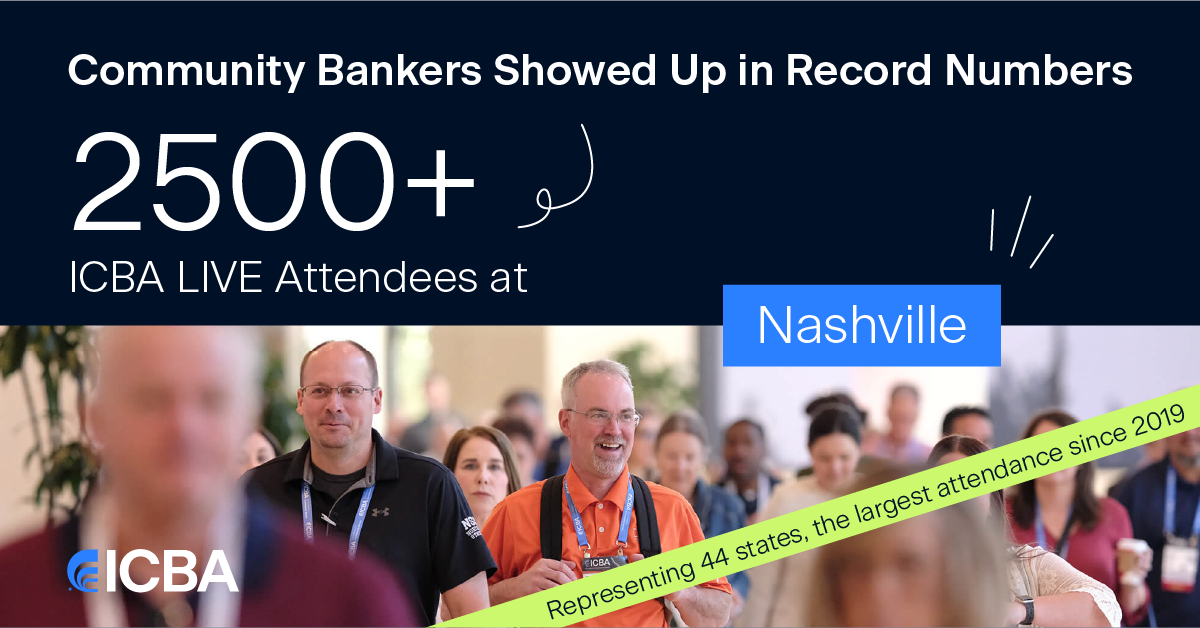
But hey, I’ve got a few months left as chairman. I’d love to see everyone in San Diego for ICBA LIVE. I’ll get to have my swan song and pass the torch to Alice Frazier. Given how much change we’ve seen already this year, I can only imagine where we’ll be in March.
Shared an Image
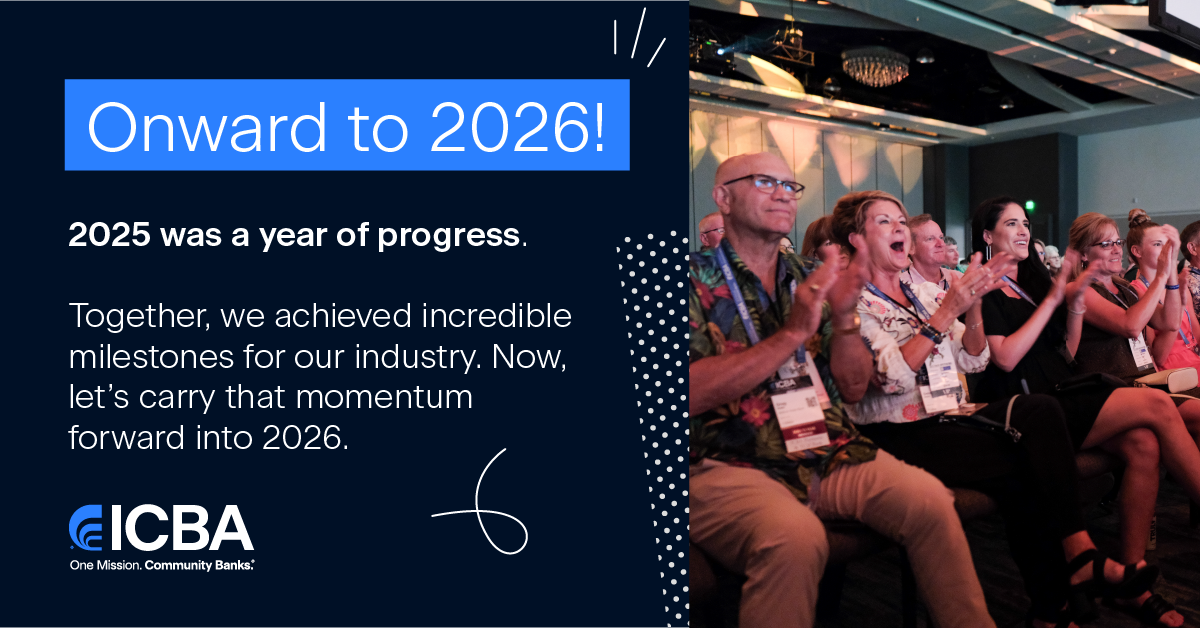
Jack: Rebeca, I hope you have a great holiday season with your family. Our industry has a lot to be grateful for and a lot to be proud of.
ICBA is all about creating and promoting an environment where community banks flourish, and I don’t think there’s much more we could have done this year to make that happen. I certainly am grateful for our nation’s community bankers and what we’ve accomplished this year.
Shared an Image